
Interview with Simone Post: intuitive and transformative design

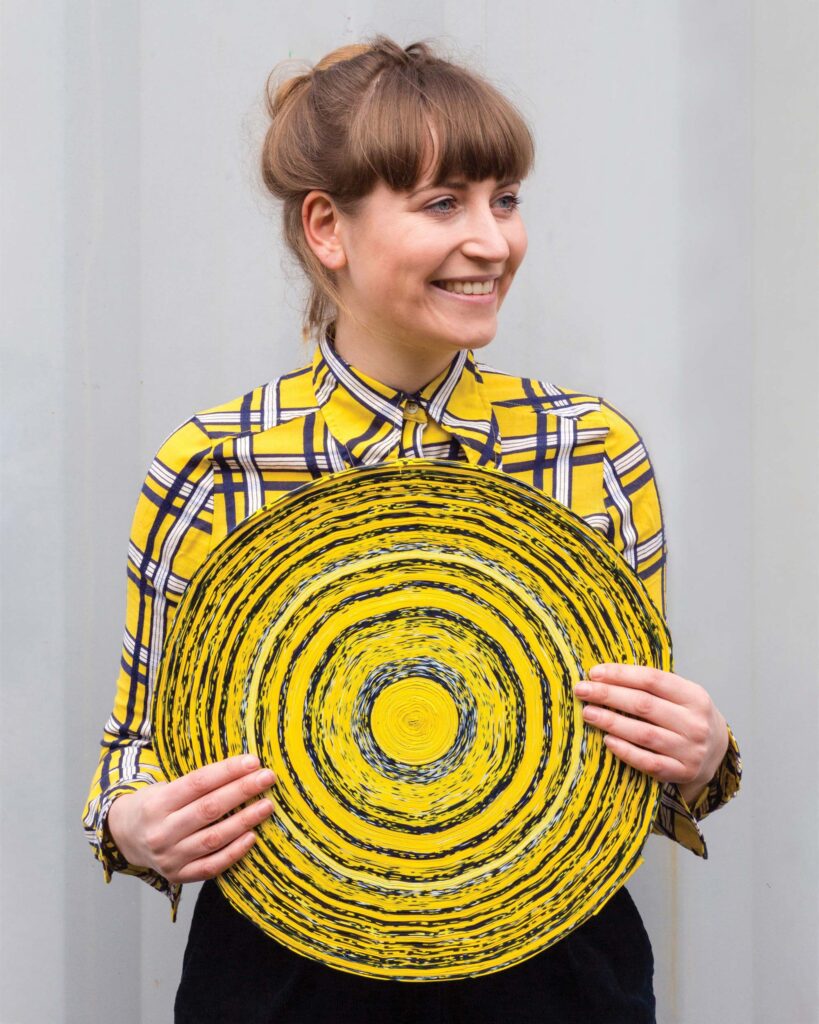
Where others see waste, Dutch designer Simone Post finds the raw material for her art. From discarded textiles, old sneakers and unexpected materials, Simone Post creates design objects, where what at first glance is no longer useful, acquires a new life.

In a chat with Yarn, the Rotterdam-based artist, who has collaborated with brands such as Hermès, Vlisco and Adidas, talks about her creative process, the challenge of the material she chooses and the need for companies to be aware of the impact of their productions on the environment.
How would you differentiate upcycling from recycling?

The main difference is the fact of adding or subtracting value to the material. The word “recycle” doesn’t mean much to me since almost everything can be recycled. Upcycling means transforming something and giving it more value than it had before. Many times, people think that a product is good because it is recyclable and that doesn’t really say much.

Your website states that the final product is not necessarily the most important aspect of the design process. What is it about the process that appeals to you?

I really enjoy making and working with the materials. The process is the most fun part because you can explore so many possibilities and all kinds of surprises pop up. I’m not a designer who knows exactly the steps beforehand: “I want to make a table, so I’m going to draw it and then I’m going to make it.” My process has the material as a starting point, and when I start working, naturally, the new product or function emerges. When something is finished, I lose interest and move on to something else.

Creating from discards would seem to be a great challenge in aesthetic terms. How does the transformation begin?

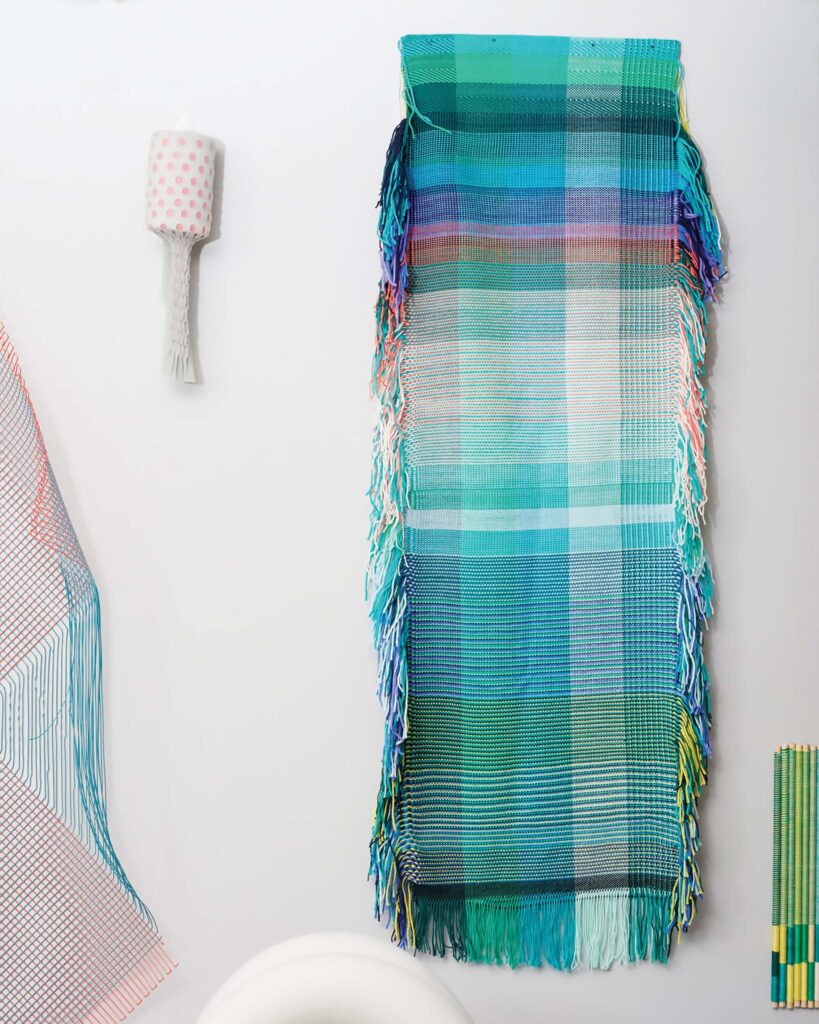
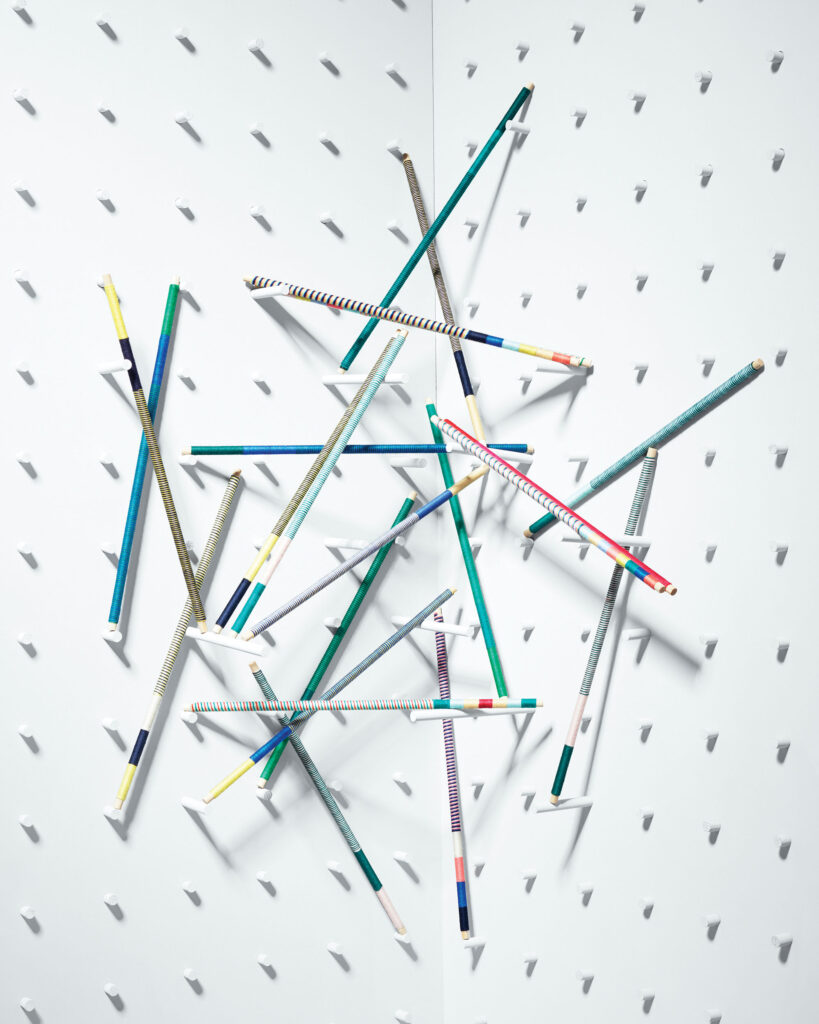
Of course it is a challenge and many difficulties arise. There are times when I would like to put everything together and find an easy solution. But the important thing is always to ask yourself what is the most challenging choice. And, at the same time, it’s the most fun because when there is material, it can always be transformed into whatever you want. My starting point is a cart full of waste that I have to sort and investigate, see what I have, what are the different shapes, play with it. Like when you are a child, you have a box of blocks and you are happy to be able to do whatever you want. Everything can be transformed into something beautiful as long as you invest energy and time. I think there is no material that cannot be transformed.

Another challenge in the use of scrap materials is the diversity of their components. There is usually a lot of mixing, with different shapes, thicknesses, colors. And consumers are used to everything being identical, perfect and flawless. And when working with this kind of things, the final product is unique, it has small differences and precisely because of that, it also has value.
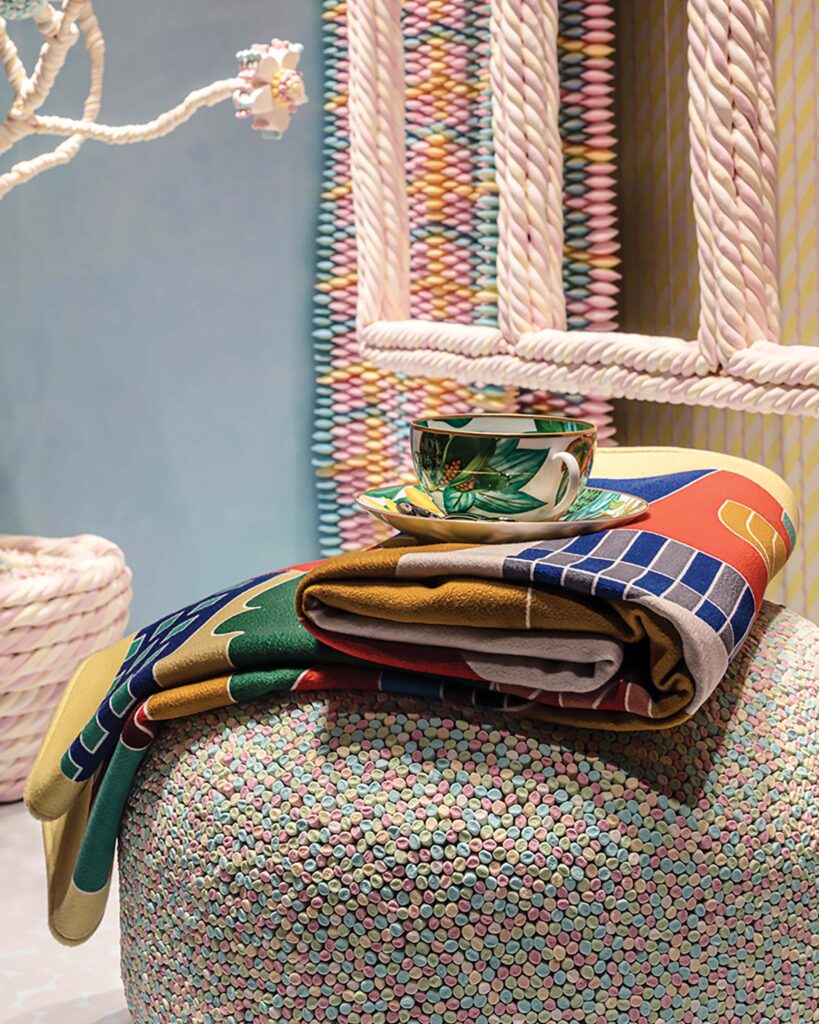
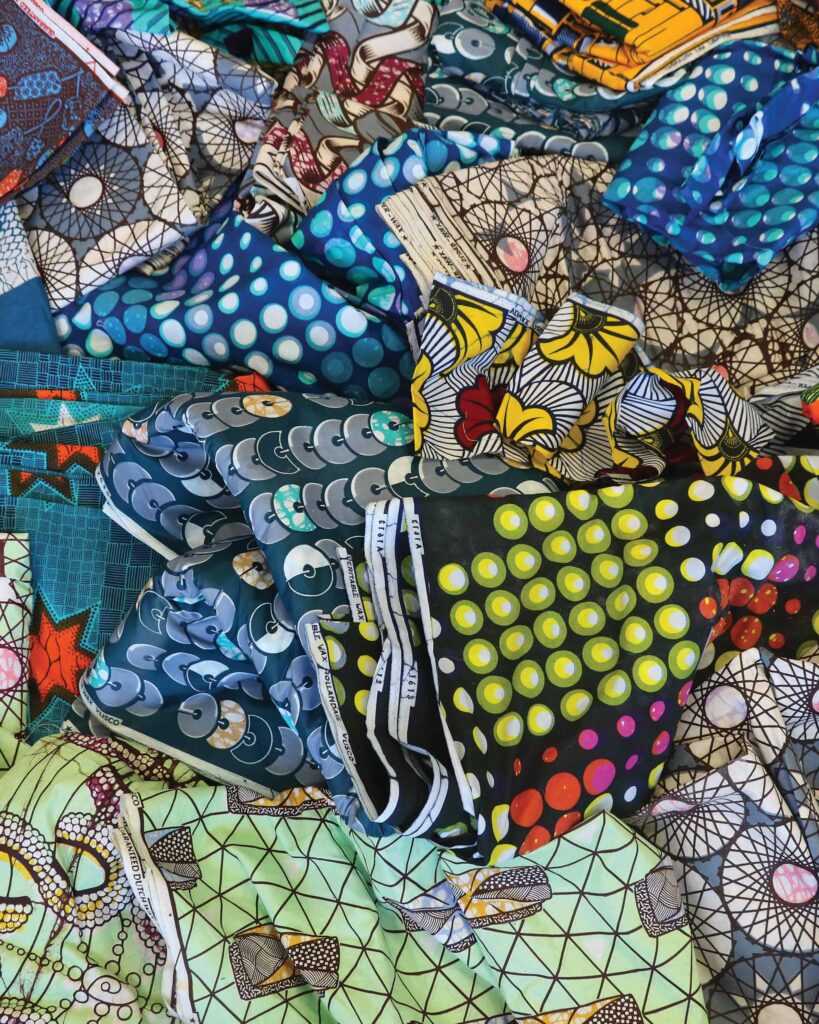
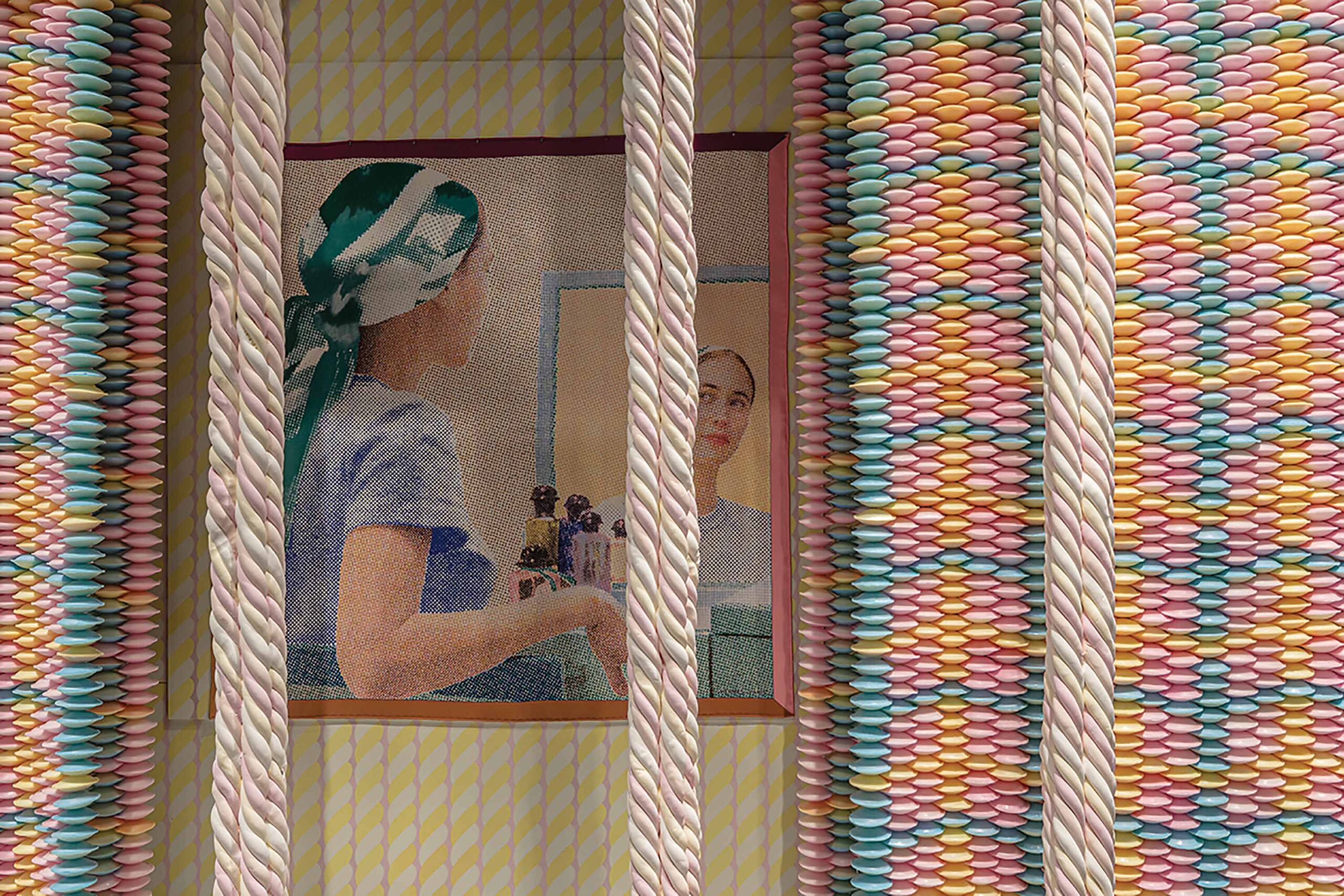
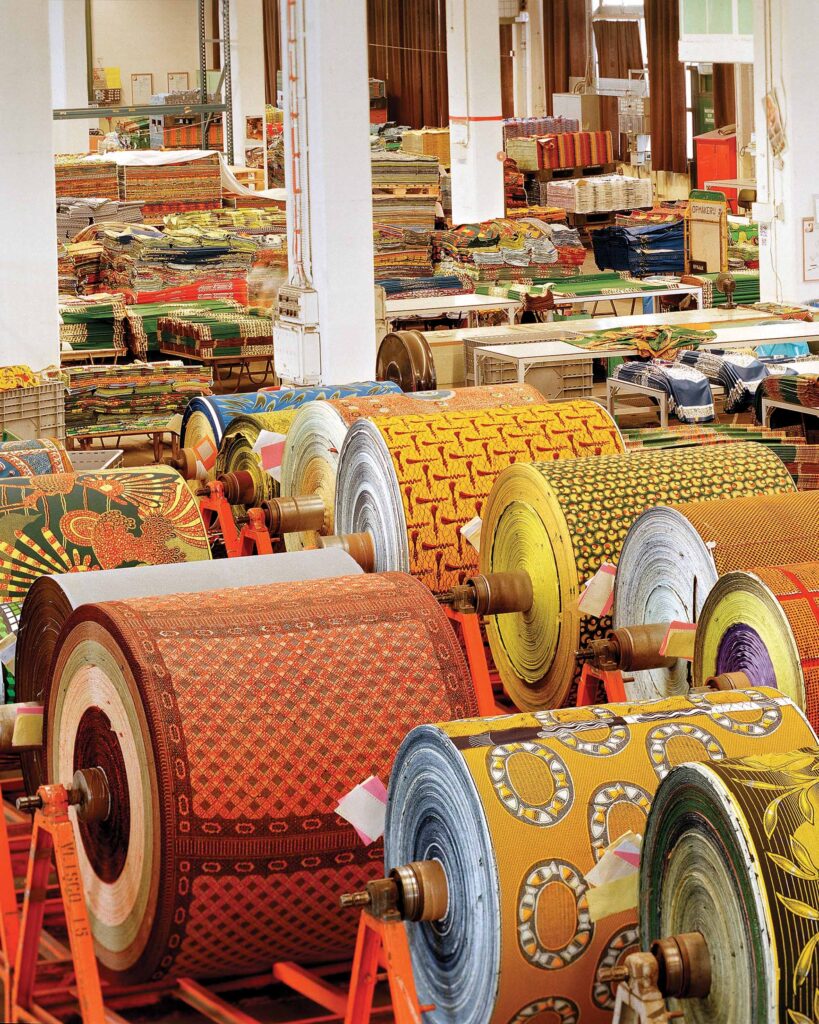
Simone Post explores with materials and the results surprise the viewer. Perhaps that is why, in recent years, she has been called upon by major brands to participate in various projects. In 2022, Simone designed for Hermès the windows of its store in Japan, creating a fantasy world built entirely with marshmellows intertwined as yarn. In 2021, she intervened the office building of Vlisco, the Dutch brand that had already invited her on other occasions to design textiles. The mural she created covers the facade of the 2500 m2 concrete building and is a celebration of color and movement that dialogues with the brand’s typical designs.

In 2019, in a collaboration for the Adidas store in Paris, he transformed old sneakers into new carpets with geometries that refer to the typical lines of the brand. Unlike other works in which he had used as raw material the offcuts left over from the manufacture of products, for the Adidas project he had the collaboration of the German company I:CO, dedicated to collect, process and recycle used clothing and footwear.

Which of all the materials you worked with for your projects or for collaborations with brands did you find the most interesting?

Vlisco’s material continues to be very interesting to me. I am a great lover of color and their basic materials are very rich and diverse in that sense.

Could you tell me about the mural you did for their offices?

The offices in Helmond were like a bunker, in a concrete building, inaccessible, which did not fit in with what Vlisco is. The brand is very experimental in terms of design and textile printing. And the office seemed very closed. I was interested in thinking about what could be done with what was already there. In the world we live in, you have to look at what’s already there and see how you can improve it. It was striking to see how by adding a new handmade layer to the building, it began to be perceived in a different way. People visit it now to take pictures and in a way it shows what is being done inside.

Do you think companies are aware of the impact of their work on the planet? What would you suggest to them?

There are companies that don’t seem to care. Rules are needed from the political point of view and also to show what super inspiring brands like Patagonia do, so that others follow the same path. I think we should always ask ourselves if things can be done differently and better.
For people interested in learning about upcycling, what book, artist or designer would you recommend?

As I mentioned, Patagonia seems to me to be a good example in those terms. I haven’t read Let My People Go Surfing yet but I’m very interested in reading it now that my team is growing and I want a good atmosphere for everyone.

I also really admire Claudy Jongstra’s work and all that she is doing with natural dyes and her farm.


Born in the Netherlands, Simone Post is a textile and product designer based in Rotterdam. Her work delves into color, surface and print. She has a predilection for the process itself, and for discovering through experimentation the hidden potential of materials and techniques. He has collaborated with companies such as Adidas, Kvadrat and Vlisco. His focus is on the unexpected uses of materials, striving to preserve craftsmanship and promote sustainability.

Entrevista a Simone Post: diseño intuitivo y transformador

Donde los demás ven desperdicios, la diseñadora holandesa Simone Post encuentra la materia prima para su arte. A partir de textiles de descarte, zapatillas viejas y materiales inesperados, Simone Post crea objetos de diseño, donde lo que a primera vista ya no sirve, adquiere una nueva vida.  

En una charla con Yarn, la artista instalada en Róterdam, que ha colaborado con marcas como Hermès, Vlisco y Adidas, cuenta sobre su proceso creativo, el desafío del material que elige y la necesidad de que las compañías sean conscientes del impacto de sus producciones en el medioambiente.  

¿Cómo diferenciarías el concepto upcycling del de reciclaje? 

La principal diferencia es el hecho de agregarle o quitarle valor al material. La palabra “reciclar” no me significa mucho ya que casi todo se puede reciclar. Upcycling significa transformar algo y darle más valor del que tenía antes. Muchas veces, la gente cree que un producto es bueno porque es reciclable y eso en realidad, no dice demasiado. 

En tu página web se afirma que el producto final no necesariamente es el aspecto más importante del proceso de diseño. ¿Qué es lo que te atrae del proceso?   

Disfruto mucho de hacer y trabajar con los materiales. El proceso es la parte más divertida porque se pueden explorar muchas posibilidades y aparecen todo tipo de sorpresas. No soy una diseñadora que de antemano sepa exactamente los pasos: “quiero hacer una mesa, entonces la voy a dibujar y después la voy a hacer.” Mi proceso tiene como punto de partida el material y, cuando empiezo a trabajar, de forma natural, surge el producto o la función nueva. Cuando algo ya está terminado, pierdo el interés y paso a hacer otra cosa.   

Crear a partir de descartes parecería ser un gran desafío en términos estéticos. ¿Cómo empieza la transformación? 

Claro que es un desafío y aparecen muchas dificultades. Hay momentos en los que quisiera poner todo junto y encontrar una solución fácil. Pero lo importante es siempre preguntarse cuál es la elección mas desafiante. Y, a la vez, es lo más divertido porque cuando hay material, siempre puede transformarse en lo que uno quiera. Mi punto de partida es un carro lleno de residuos que tengo que ordenar e investigar, ver qué tengo, cuáles son las diferentes formas, jugar con eso. Como cuando sos un niño, tenés una caja de bloques y sos feliz de poder hacer lo que quieras. Todo puede transformarse en algo bello siempre y cuando se invierta energía y tiempo. Creo que no hay material que no pueda transformarse. 

Otro desafío en cuanto al uso de materiales de descarte, es la diversidad de sus componentes. Por lo general hay mucha mezcla, con diferentes formas, grosores, colores. Y los consumidores están acostumbrados a que todo sea idéntico, perfecto e impecable. Y al trabajar con este tipo de cosas, el producto final es único, tiene pequeñas diferencias y justamente por eso, también tiene valor.  

Simone Post explora con los materiales y los resultados sorprenden al espectador. Quizás por eso, durante los últimos años, marcas grandes la han convocado para participar en proyectos diversos. En 2022, Simone diseñó para Hermès las vidrieras de su tienda de Japón, creando un mundo de fantasía construido íntegramente con marshmellows entrelazados como hilados. En 2021, intervino el edificio de oficinas de Vlisco, la marca holandesa que ya la había convocado en otras oportunidades para el diseño de textiles. El mural que creó cubre la fachada del edificio de hormigón de 2500 m2 y es una celebración de color y movimiento que dialoga con los diseños típicos de la marca. 

En 2019, en una colaboración para la tienda Adidas de París transformó zapatillas viejas, en alfombras nuevas con geometrías que remiten a las típicas líneas de la marca. A diferencia de otros trabajos en los que había usado como materia prima los recortes sobrantes en la fabricación de productos, para el proyecto de Adidas contó con la colaboración de la empresa alemana I:CO, dedicada a recolectar, procesar y reciclar indumentaria y calzado usado. 

¿Cuál de todos los materiales con los que trabajaste para tus proyectos o para las colaboraciones con marcas, te resultó el más interesante? 

El material de Vlisco sigue siendo muy interesante para mí. Soy una gran amante del color y sus materiales básicos son muy ricos y diversos en ese sentido.  

¿Podrías contarme sobre el mural que hiciste para sus oficinas?    

Las oficinas en Helmond eran como un bunker, en un edificio de hormigón, inaccesible, que no encajaba con lo que es Vlisco. La marca es muy experimental en cuanto al diseño y la impresión textil. Y la oficina parecía muy cerrada. Me interesaba pensar qué se podía hacer con lo que ya había. En el mundo en el que vivimos primer hay que mirar lo que ya está ahí y ver como se puede mejorar. Fue llamativo ver cómo al agregarle una nueva capa hecha a mano al edificio, empezó a percibirse de una forma diferente. La gente lo visita ahora para sacarle fotos y de cierta forma se muestra lo que se hace adentro. 

¿Creés que las compañías son conscientes del impacto de su trabajo en el planeta? ¿Qué les sugerirías? 

Hay empresas a las que parece no importarle. Se necesitan reglas desde lo político y también mostrar lo que hacen marcas super inspiradoras como Patagonia, para que otras sigan el mismo camino. Creo que siempre hay que preguntarse si las cosas pueden hacerse diferente y mejor. 

A las personas interesadas en aprender sobre upcycling, ¿qué libro, artista o diseñador les recomendarías? 

Como ya mencioné, Patagonia me parece un buen ejemplo en esos términos. Todavía no leí Let My People Go Surfing pero me interesa mucho leerlo ahora que mi equipo está creciendo y quiero que haya una buena atmósfera para todos. 

También admiro mucho el trabajo de Claudy Jongstra y todo lo que está haciendo con los tintes naturales y su granja. 


Nacida en Países Bajos, Simone Post es diseñadora textil y de productos basada en Róterdam. Su trabajo profundiza en el color, la superficie y la impresión. Tiene predilección por el proceso en sí, y por descubrir a través de la experimentación el potencial oculto de los materiales y las técnicas. Ha colaborado con empresas como Adidas, Kvadrat y Vlisco. Su atención se centra en los usos inesperados de los materiales, esforzándose por preservar la artesanía y promover la sostenibilidad.